
A car HPI check is the motor trade’s secret weapon. It’s the essential background check you run on a used vehicle, digging up its hidden history before you commit your cash. Think of it as a property survey, but for a car—it exposes the deal-breaking issues like outstanding finance, theft records, and previous write-offs that could turn a great forecourt prospect into a complete nightmare. For any professional, it's an absolutely indispensable bit of due diligence.
Why a Car HPI Check Is Your First Line of Defence

Before a single pound leaves your business account for a used vehicle, you need its full story. A professional vehicle history check, often called an HPI check (after the original Hire Purchase Investigation service), is your first and most critical line of defence against buying a lemon. This isn't just about ticking a box; it's a fundamental risk management tool for anyone in the UK motor trade.
Let’s put it into perspective. Imagine you're an independent dealer eyeing up a tidy 2018 Ford Puma at auction. It's showing just 45,000 miles and looks like a steal at £12,000. Without a proper check, you could be driving straight into a financial minefield. A shocking number of used cars in the UK—millions, according to some reports—are hiding serious issues like outstanding finance agreements.
This is exactly where a professional check from a provider like AutoProv earns its keep. It dives deep into a vehicle's past, flagging the kinds of problems a seller might conveniently forget to mention, or genuinely not even know about.
The True Cost of Skipping a Check
For dealers, fleet managers, and auction buyers, the stakes couldn't be higher. Rolling the dice and buying a vehicle with a hidden history can have serious blowback:
- Financial Loss: Buying a car with outstanding finance is a classic blunder. The finance house still legally owns it and can repossess it at any moment, leaving you with nothing but a hole in your accounts.
- Reputational Damage: Imagine unknowingly selling a previously written-off or stolen vehicle to a customer. The damage to the trust you've spent years building could be irreversible.
- Legal Complications: Selling a car with a dodgy past without full disclosure can land you in hot water with Trading Standards and lead to messy legal disputes.
A professional car HPI check transforms unknown risks into manageable information. It's the difference between gambling on a vehicle's history and making an informed, data-driven business decision.
Ultimately, a comprehensive vehicle check is much more than a simple background search; it's the bedrock of a secure and profitable buying strategy. By building an instant, multi-source check from a service like AutoProv into your process, you give your business the power to vet every potential purchase with speed and certainty. To learn more about what to look for, check out our guide on essential vehicle checks before buying. This simple step ensures every car you add to your stock is a solid investment, protecting your business from the ground up.
Decoding Your Professional Vehicle History Report
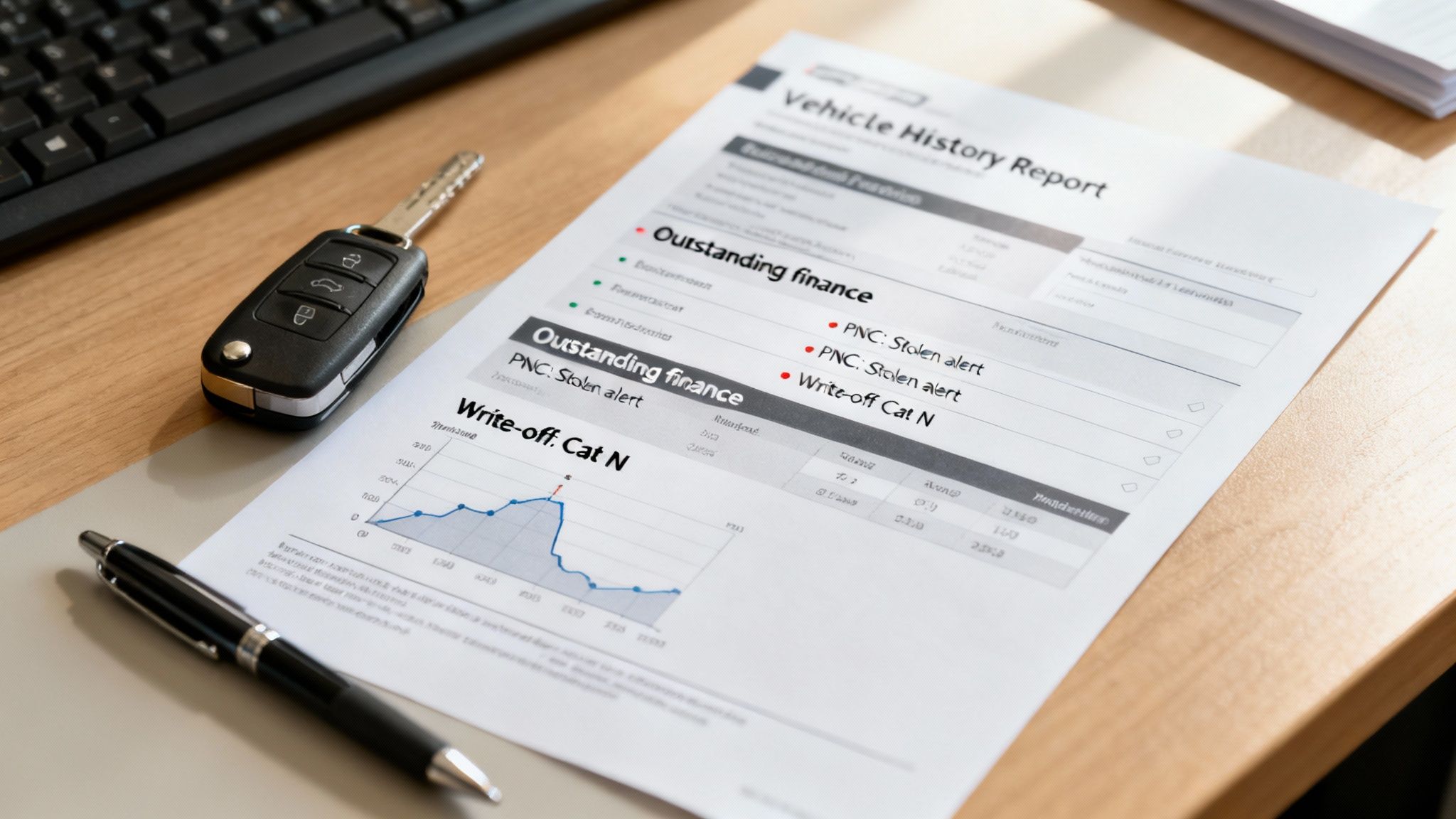
A professional car HPI check isn't just a simple pass-or-fail certificate; it’s an intelligence dossier on a vehicle’s entire life. Think of it less like a single snapshot and more like a high-resolution film, revealing the critical moments that define a car’s past and, more importantly, its future value. For anyone in the motor trade, knowing how to read these reports is what separates a calculated investment from a costly mistake.
An AutoProv report pulls together crucial information from trusted data sources, presenting it in a clear, scannable format designed for quick decisions. Let's break down the core components you’ll find and what they really mean for your business.
Outstanding Finance and High-Risk Flags
This is your first—and arguably most important—port of call. If a car has an outstanding finance agreement, like a Hire Purchase (HP) or Personal Contract Purchase (PCP), it legally belongs to the finance company, not the person trying to sell it. If you buy it, you run the very real risk of the lender repossessing the vehicle from you or your customer, leaving you seriously out of pocket.
Picture this: you appraise a part-exchange, agree on a price, and then an AutoProv check reveals £8,000 is still owed to a lender. That discovery is a non-negotiable deal-breaker unless the finance can be settled as part of the transaction. High-risk flags will also alert you to other potential headaches, like a car being used as security against a logbook loan.
A clean finance check is the green light for any purchase. It confirms the seller has the legal right to transfer ownership, securing your investment from the very beginning.
Stolen and Insurance Write-Off Status
The next critical layer of protection comes from checking national databases for theft and insurance write-offs. It’s about ensuring the car is legitimate and its condition is transparent.
- Police National Computer (PNC): This check instantly tells you if a vehicle has been reported as stolen. Acquiring stolen goods, even if you do it unknowingly, is a massive legal problem that leads to the car being seized and a significant financial loss for your business.
- MIAFTR Database: The Motor Insurance Anti-Fraud and Theft Register (MIAFTR) is where you’ll find vehicles declared a total loss, or "written off," by an insurer.
These write-offs have categories that tell you how bad the damage was. A Category N (Non-Structural) write-off, for example, might be an easy, profitable repair. But finding an undisclosed Category S (Structural) marker on what looked like a clean car is a huge red flag. This knowledge protects you from overpaying for a vehicle with a compromised chassis and helps maintain your dealership’s good name.
Mileage Discrepancy Analysis
"Clocking"—the illegal practice of winding back a car's odometer—is still a major problem in the industry. A dodgy mileage reading can falsely inflate a car's value by thousands of pounds.
An AutoProv report fights this by cross-referencing mileage data from multiple sources, including:
- Previous MOT tests recorded with the DVLA.
- Service and maintenance records.
- Data from previous keeper changes.
Any weird inconsistencies are flagged immediately as a mileage discrepancy. For instance, if a car’s 2023 MOT shows 80,000 miles, but its 2024 test mysteriously reads 65,000, the report will shout about it. This gives you the chance to investigate further or simply walk away from a deceptive deal. For a deeper dive, read our full overview in A Motor Trader’s Guide to the Professional Car Report.
By pulling all these vital checks into one 360-degree report, you get a clear and complete picture. This isn't just data; it's the actionable intelligence you need to buy smarter, protect your margins, and build an inventory you can trust.
How to Interpret Red Flags and Make Smart Decisions

Hitting a red flag on a car HPI check isn’t a dead end—it’s a crossroads. For any serious motor trade professional, this is the moment data turns into a critical business decision. It's not about just walking away; it's about using the information in an AutoProv report to investigate, negotiate, or dodge a bullet with complete confidence.
This is where you can turn a potential headache into a profitable opportunity, or just as importantly, sidestep a financial trap waiting to spring. Let's break down the most common red flags and the smart, decisive actions you need to take.
Responding to a Mileage Discrepancy
A mileage discrepancy flag is an instant alert for potential 'clocking', but it demands a closer look before you jump to conclusions. It could be something as innocent as a typo during an MOT, or it could be a deliberate attempt to deceive. The key is to be methodical.
Start by digging into the paperwork. Cross-reference the report's mileage history with the physical service book and any invoices you have. Do the dates and mileage readings make sense? A single odd entry might have a simple explanation, but a clear pattern of decreasing or stagnant mileage is a massive cause for concern.
If the records are patchy or missing, let the car tell its own story. Look for the tell-tale signs of wear and tear that just don't match the number on the clock. Think excessive wear on the driver's seat bolster, a shiny steering wheel, or worn-down pedals. If a car feels like it's done 90,000 miles but the odometer reads 40,000, your best move is to walk away. No questions asked.
Handling an Outstanding Finance Marker
An outstanding finance marker is one of the most serious red flags you can encounter, but it doesn't have to be a deal-breaker. It simply means a finance company still has a legal claim on the car. Your next steps here are non-negotiable.
You absolutely must ensure the finance is settled before any money changes hands. The process is straightforward and protects everyone involved:
- Get a Settlement Figure: Ask the seller to get an official settlement letter from their finance provider. This document will show the exact amount needed to clear the debt.
- Facilitate Direct Payment: The safest way to handle this is to pay the finance company directly yourself. You then deduct that settlement amount from the agreed purchase price for the car.
- Obtain Proof of Clearance: Never, ever complete the purchase until you have written confirmation from the lender that the finance is clear and their interest in the vehicle has been removed.
Ignoring an outstanding finance flag is a fast track to financial disaster. The finance company can repossess the vehicle at any time, leaving you without the car and without the money you paid for it. AutoProv’s instant checks protect your capital by flagging this risk right at the start.
Turning a Write-Off into a Smart Buy
Discovering a vehicle has been written off in the past can be a hugely powerful negotiating tool—if you know what you’re looking at. For a franchised dealer, accidentally retailing a Category N write-off that's been presented as pristine could destroy your reputation. HPI checks uncover a staggering number of insurance write-offs every single day in the UK. Many of these cars hit the market with sellers who are unaware of—or are hiding—their salvage history.
A Category S (Structural) write-off demands extreme caution. You'll need a thorough professional inspection to be certain the repair quality is up to scratch. A Category N (Non-Structural) vehicle, on the other hand, could be a fantastic opportunity. The damage was cosmetic or electrical, so if it's been repaired to a high standard, the car can be perfectly safe and reliable.
This is where you can use the information to your advantage. A Cat N marker rightly reduces a car’s market value, so you should be negotiating a significant discount. Of course, you must also be transparent about this history when you retail the car. To get a full picture of what each category means for valuation and safety, check out our deep-dive guide on UK write-off categories explained. AutoProv’s reports give you this crucial context, letting you instantly assess the risk and make a more profitable buy.
Consumer vs. Trade-Grade Checks: More Than Just a Name
Not all vehicle checks are cut from the same cloth. When your business reputation and bottom line are on the line, the gulf between a basic consumer check and a professional, trade-grade car HPI check is massive. Using a consumer check for your dealership is like taking a kitchen knife to a surgeon’s table—it’s just not fit for purpose.
A quick, cheap check might feel like a savvy cost-saving move, but it leaves dangerous blind spots in the information you rely on. As a trade professional, you’re operating in a fast-paced, high-stakes world where accuracy, speed, and deep data aren't just nice-to-haves; they're essential. This is where the difference really hits home.
Depth of Data and Commercial Intelligence
The biggest distinction is the sheer volume and type of data you get back. A typical consumer check will cover the bare essentials: outstanding finance, write-off status, and whether the car's been reported stolen. That’s useful, but for a professional buyer, it’s only scratching the surface.
A proper trade-grade report, like the ones from AutoProv, is built to deliver commercial intelligence, not just a history lesson. We pack our reports with critical data points designed to help you make smarter, more profitable business decisions.
This includes commercial metrics that are vital for your day-to-day operations:
- Accurate Valuations: Instantly see current trade vs. retail pricing to know your potential margin on the spot.
- Desirability Scores: Get a feel for how quickly a particular model is selling right now, helping you manage your stock turn.
- Depreciation Curves: Look into the future and forecast a vehicle’s value to sharpen your pricing and part-exchange offers.
- Full OEM Specifications: Know the car inside and out—from the exact wheel size to the specific trim level—so you can price it with total confidence.
This level of detail transforms a simple background check into a powerful commercial tool.
Speed and Financial Protection Built for Business
In the cut and thrust of an auction hall or a part-exchange appraisal, every second counts. Consumer checks are often designed for one-off use and can be frustratingly slow. Trade platforms like AutoProv are engineered for speed, delivering a full report in under 30 seconds so you can make a call right then and there.
But the most critical difference? The level of financial protection. A consumer check might come with a limited data guarantee, but a professional service provides a solid indemnity policy designed specifically for business-level risk.
This indemnity is your financial safety net. If a report gets a key detail wrong—like finance, theft, or write-off status—and it costs your business real money, you’re covered. AutoProv offers indemnity options up to £50,000, giving you a peace of mind that consumer checks simply can’t offer. It’s the assurance you need to protect your capital and your hard-earned reputation.
For a deeper dive into these advantages, check out our practical guide on HPI checks for traders. This is why pros in the motor trade always choose a service built for their unique needs—one that delivers precision, speed, and business-grade security with every single check.
Making Vehicle Checks Part of Your Daily Workflow
Running a professional car HPI check shouldn't be a box-ticking exercise you do at the last minute. To get the most value, it needs to be woven directly into the fabric of your business operations. Think of it less as a reactive task and more as a proactive, fundamental step in how you acquire stock.
Getting this right saves a phenomenal amount of time, prevents you from buying lemons, and ultimately helps you build a forecourt full of high-quality, fully-vetted vehicles. AutoProv's platform is designed for this kind of efficiency, giving you the data you need, exactly when you need it. Let's walk through a practical blueprint for integrating these checks into your business.
Pre-Acquisition Screening at Auctions
The auction hall is a fast-paced, high-pressure environment. It’s where costly mistakes are made in a heartbeat. You simply cannot afford to show up unprepared. The real work starts before you even place a bid, and that means running checks on your list of potential targets.
This is where a tool like AutoProv's batch checking feature really comes into its own. You can quickly screen an entire auction catalogue, which lets you:
- Filter out the high-risk cars instantly: Straight away, you can spot and discard any vehicles with major red flags like a stolen marker, active finance agreements, or serious structural damage (Category S).
- Focus your bidding power: By weeding out the duds early on, you can concentrate your time, attention, and funds on the cars that represent a genuine, profitable opportunity.
- Go in with your eyes open: Even for vehicles with more minor issues, like a Category N write-off, you’ll have the facts. This allows you to adjust your maximum bid to protect your margin right from the start.
On-the-Spot Part-Exchange Appraisals
A customer pulls onto your forecourt wanting to part-exchange their car. Your appraisal needs to be quick, fair, and above all, accurate. An instant vehicle check is an absolutely indispensable part of this process, giving you objective data to back up your valuation.
Picture this: a customer wants to trade in a car they genuinely believe is in pristine condition. A quick check on AutoProv reveals a hidden mileage discrepancy or a past insurance write-off they might not have even been aware of. This isn't about trying to catch them out; it’s about establishing the car's true market value based on its complete, factual history.
Using a data report during an appraisal takes the emotion out of the negotiation. It allows you to transparently show the customer why you’ve reached a certain valuation, justifying your offer with hard evidence rather than just your opinion. This builds a huge amount of trust and reinforces your reputation as a fair and professional dealership.
The Final Pre-Purchase Confirmation
It doesn't matter how you're sourcing a vehicle—from an auction, a trade-in, or even another dealer. There is one golden rule you must never break: always run a final check immediately before you pay for it. A vehicle's status isn't set in stone; it can change overnight. A car that was all clear yesterday could be reported stolen this morning or have a logbook loan taken out against it.
This final, indemnified check is your ultimate safety net. It's the non-negotiable step that confirms nothing has changed since your initial screening. By making this a mandatory part of your buying process, you ensure every single pound you invest is protected, securing the foundation of a profitable and trustworthy inventory.
Turning Vehicle Data into Profit

A proper vehicle report is far more than just a safety net. Think of it as a commercial tool, ready to give you an edge in a fiercely competitive used car market. Success isn’t just about dodging the duds; it’s about squeezing every last pound of margin out of the good ones. The rich data inside an AutoProv report turns a standard car HPI check into a serious business intelligence asset.
This is where the game changes. You stop reacting to vehicle history and start using data to actively drive your profitability. Imagine spotting an undervalued gem at auction because you have real-time desirability scores that others don’t. Or being able to calculate reconditioning costs with laser-like accuracy because you know the vehicle’s exact factory spec. It’s this level of detail that puts you a step ahead of the competition.
Price Your Stock with Pinpoint Accuracy
Pricing is one of the toughest balancing acts for any motor trader. Go too high, and a car becomes a permanent fixture on your forecourt, tying up cash. Go too low, and you've just given away your profit margin. An AutoProv report delivers the hard data you need to price with confidence and precision.
Our trade-focused reports are packed with commercial metrics to sharpen your pricing strategy:
- Accurate Trade vs. Retail Valuations: Get an instant read on the current market value. This lets you see the potential profit margin right from the appraisal.
- Model-Specific Desirability Scores: See how quickly a specific model is shifting in the current market, helping you stock the cars that sell fast.
- Depreciation Curves: Look into the future and forecast a vehicle’s value down the line. This is invaluable for sharpening your part-exchange offers and managing long-term stock.
When you weave this intelligence into your process, you replace guesswork with data-driven decisions that directly boost your bottom line.
The right vehicle data doesn’t just tell you what a car is worth; it shows you what it could be worth to your business. It turns guesswork into a calculated strategy for maximising profit on every single unit you stock.
Build a Smarter, More Profitable Inventory
Ultimately, the data from your vehicle checks should feed directly into your stock acquisition strategy. By spotting trends across multiple reports, you can start to build a clear picture of which models, specifications, and age brackets consistently bring in the best returns for your dealership. This is the secret to refining your buying habits.
You can then focus your time and money on vehicles that are not only clean historically but also have the highest potential for a quick, profitable sale. It’s a proactive approach that ensures your forecourt is always filled with high-quality, desirable stock that doesn't hang around. For a deeper dive into market dynamics, check out our analysis of how market trends influence vehicle pricing.
AutoProv gives you the tools to not just vet cars, but to build a more intelligent, profitable inventory from the ground up.
Got Questions About HPI Checks? We’ve Got Answers
Even when you’ve been in the trade for years, specific questions about vehicle history checks pop up. Let's tackle some of the most common queries we hear from dealers, auction buyers, and fleet managers to clear up any confusion.
Is an HPI Check Actually a Legal Requirement for Dealers?
This is a great question, and the answer isn't a simple yes or no. While no law explicitly states "you must perform an HPI check," selling a car with outstanding finance or other serious hidden issues puts you squarely in breach of the Consumer Rights Act 2015.
Think of a professional car HPI check as your essential due diligence. It's the documented proof that you’ve done your homework to verify a vehicle’s history, protecting your business from costly legal battles and financial penalties. Using a trade-grade service from AutoProv, which includes indemnity cover, gives you a rock-solid defence and a vital financial backstop.
How Long Is an HPI Check Valid For?
A vehicle check is a snapshot in time. It’s only as good as the moment the report is generated. Critical data points, like whether a vehicle is flagged as stolen or has a new finance agreement lodged against it, can change literally overnight.
This is why best practice in the motor trade is always to run a check as close to the point of purchase as possible. AutoProv’s instant reports make it easy and affordable to run a final check right before the money changes hands, giving you peace of mind that nothing has changed since you first appraised the car.
Can a Write-Off Category Be Removed from an HPI Report?
In a word, no. Once an insurer records a vehicle as a write-off on the Motor Insurance Anti-Fraud and Theft Register (MIAFTR), that marker becomes a permanent part of its history. It cannot be erased or hidden.
Even if a vehicle is repaired to the highest standard and sails through a new MOT, the history of it being a Category S or N write-off will always be there. This is precisely why a professional check is so crucial—it gives you the full, unvarnished story, allowing you to accurately judge a vehicle's true history and market value.
A write-off marker isn't a temporary note; it's a permanent part of a vehicle's story. It's a historical fact that will influence its value, desirability, and insurability for the rest of its life.
What Does Trade-Level Indemnity Really Protect Me From?
There’s a world of difference between the data guarantees offered on consumer checks and the robust indemnity designed for professionals. A consumer check might offer a token guarantee, but AutoProv's trade-grade reports provide optional indemnity cover up to £50,000.
This cover is built specifically for the high-stakes world of the motor trade. It acts as a powerful financial safety net, protecting you from significant losses if a report contains incorrect data about finance, theft, or write-off status. Put simply, it’s proper financial protection built for your business.
Published by AutoProv
Your trusted source for vehicle intelligence